8 Ways AI Could Harm Your Brand

TL;DR
AI is a double-edged sword for brands. This guide walks through 8 real ways it can backfire: duplicate content, looming regulation like the EU AI Act, algorithmic bias (see Apple Card), hallucinations and misinformation, deepfakes, low employee trust, privacy and data-protection gaps, and misuse from poor training (remember Microsoft's Tay). The takeaway is simple: weigh the upside against the risk, and verify everything before you ship.
Technology can be a double edged sword for companies and brands, as it can act like an unbridled force with the potential to change things for better or worse.
This ‘worse’ has come up in different ways. Amazon was left red-faced when their Rekogition software was used to conduct facial-recognition tests, where it incorrectly matched NFL champ, Duron Harmon, with a criminal’s mugshot.
Artificial Intelligence can also be prone to problems, with chatbots having told people with suicidal risks to go through with the act. Although tech companies have moved fast to tamp down on these interactions, it could have been concerning for any third-party company using this chatbot.
Additionally, complex discussions around ethical, legal, financial, political, and regulatory ramifications continue to dog artificial intelligence - conversations you should be paying attention to.
Here are a few things to be wary about with AI:
- Repetitive and duplicate content At first glance, the content generated by ChatGPT and other generative AI, is nothing short of extraordinary. It’s rich, varied and comes quite close to the content written by a human. A second, third and fourth glance (through a few more prompts) can reveal the same content, regurgitated in a different way. This is a risk many digital marketers must consider, as dry and repetitive content can spur the slow march to obscurity for a brand. It can become a larger problem when you’re using AI to create social media content, as you don’t want the same posts as your competitor. This lack of creativity and ingenuity can lead to a loss of customer engagement and loyalty.
- Regulations on the horizon Governments across the globe are looking at whether regulation needs to be introduced for the use of AI. The EU has already reached a preliminary deal on the text of an ambitious Artificial Intelligence Act, which was drafted two years ago. Furthermore, tech leaders have released a joint statement that explicitly states - "Powerful AI systems should be developed only once we are confident that their effects will be positive and their risks will be manageable”. What does this mean for you? If you use AI for your business practices, especially content generation, would you have to remove them once countries start passing new regulations? Are there any potential liabilities from future laws? If you have drafted a roadmap for the next few years - keeping AI in mind - you may need to put those plans on pause, make alterations or remove certain elements that might directly relate to upcoming regulations.
- Unintentional bias Even the whiff of bias can disrupt a brand’s value and possibly crash their stock price. Unfortunately, bias is a pressing concern when it comes to AI algorithms and their results. Skewed results can arise from the biases of programmers or problematic data used to train AI. For instance, Goldman Sachs customers reported that Apple’s Credit Card Assessment algorithm reflected a significant gender bias by offering higher credit limits to men and lower to women with the same credit qualifications. The New York Times reported on a couple - David Heinemeier Hansson and Jamie Hansson - who received widely differing credit limits, where the wife’s application was denied and the husband’s credit limit was 20 times higher. Biases - be it gender, race, ethnicity, sexuality, class or more - can affect customers negatively and reflect very poorly on your brand.
- More misinformation, more check
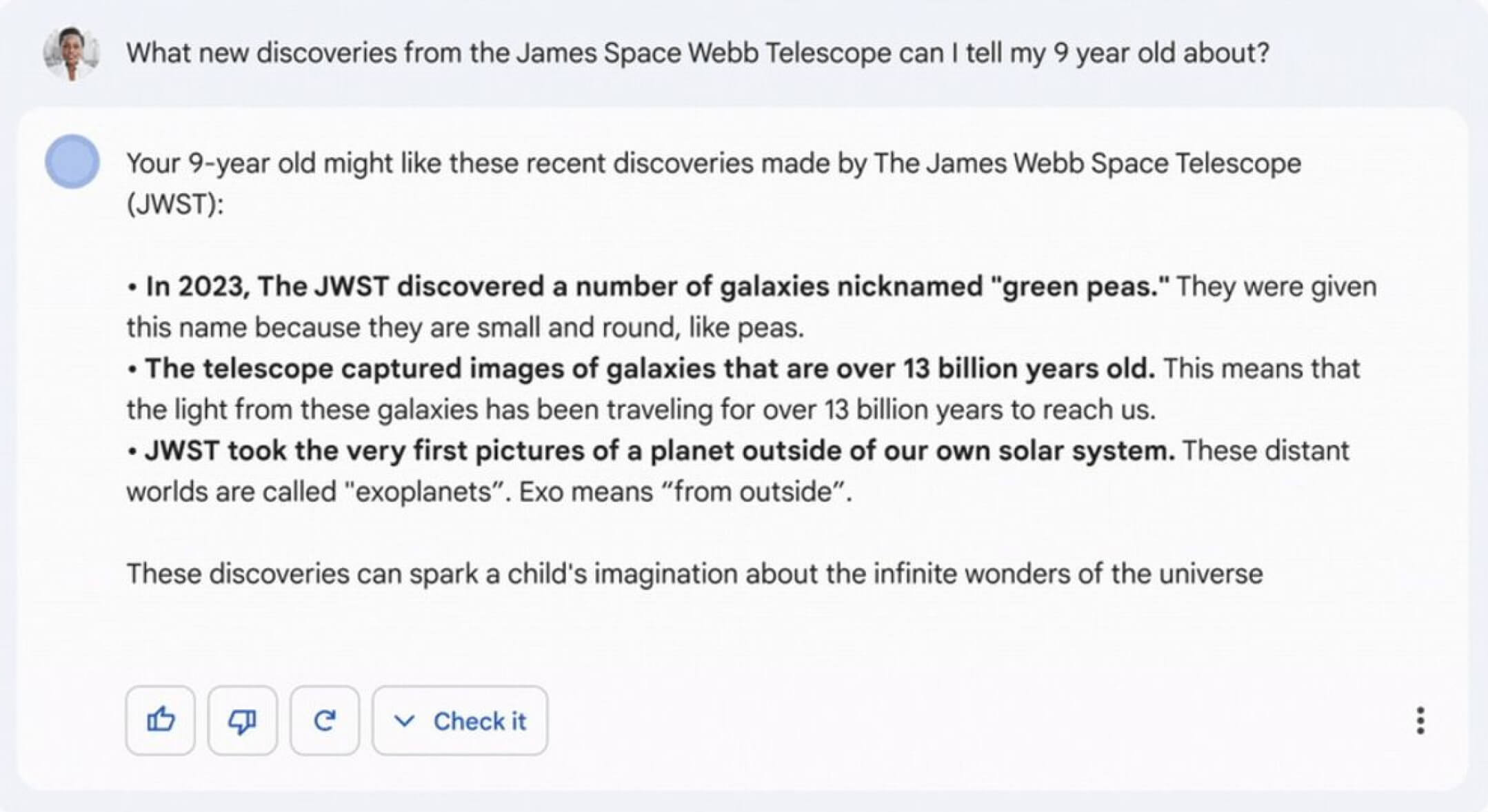
- Did you know that AI can hallucinate information? You’ll find statistics that don’t exist, leading to websites that don’t exist either. AI models can also incorrectly interpret data or give you outdated data. It all depends on what data access has been given to those models for training. This is of prime importance to marketers - whether you’re communicating with clients, the target audience, or the general public. According to Gartner, 70% of enterprise CMOs are expected to prioritize accountability, authenticity and ethical marketing in the next two years. Will that be possible with AI?
- Interestingly, a year after Chat GPT made its debut, researchers tested what content an AI chatbot would write after it was fed questions loaded with conspiracy theories and fake news. The results were so controversial, researchers stated that ChatGPT is “going to be the most powerful tool for spreading misinformation that has ever been on the internet.” It’s easy to see why an estimated 80% of enterprise marketers may decide to establish a dedicated content authenticity check by 2027, to fight misinformation and fake news. In the meantime, all brands can do is verify, verify, verify.
- Deep Fakes
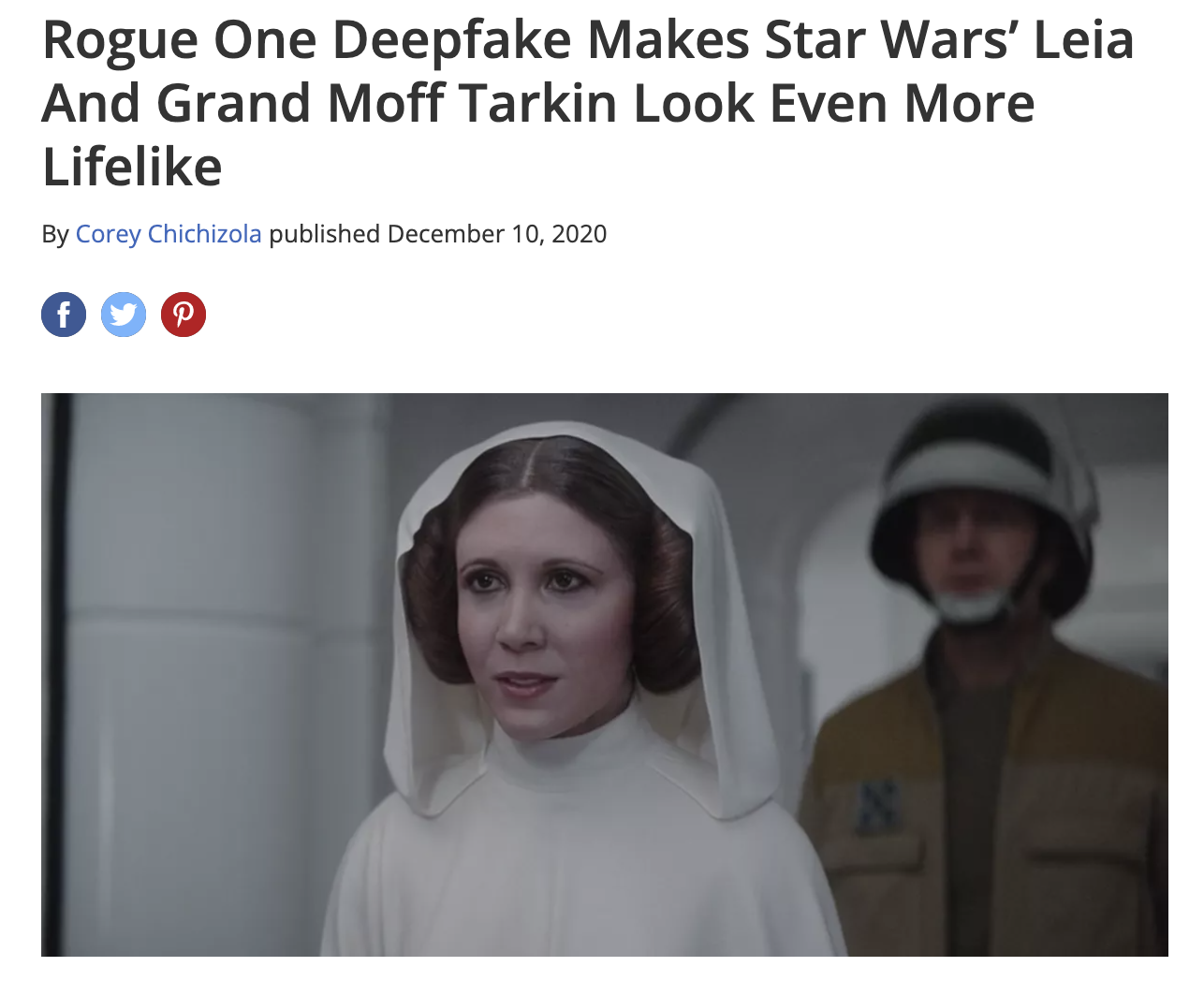
- Speaking of verification, elections are on the horizon, and interestingly AI could be a pivotal power in swaying the results one way or the other. Today, AI has reached a level of sophistication and artistry that can create cloned human voices or hyper realistic audio, video and images. When mixed with the right social media algorithms it can create a cocktail of false information and digital content that will spread far and wide.
- This is disastrous in many spheres, including for your business. Deep-fakes of Mark Zuckerberg ranting about how he stole the data from billions of people, or politicians abusing other world leaders, can cause disruptions in various avenues. Experts have repeatedly discussed how easily AI can generate synthetic media, which can be used to mislead consumers. Although deep fakes can create affordable, hyper-personalized and omni-channel campaigns (or even bring icons to life on the screen), the cons currently outweigh the pros.
- Lack of employee trust You may be thinking of adopting AI into your business; however, your employees may feel differently. KPMG, in partnership with the University of Queensland, Australia, discovered 61% of respondents were wary or unwilling to trust AI. Implementation and smooth functioning may be harder to achieve without basic trust. You don’t want these murmurs landing up on Glassdoor. Additionally, AI often produces unexplainable results, making it hard to determine how and why an AI reached its decision or conclusion. Situations like this, involving sophisticated systems that are continuously learning, can erode trust in the company and their practices.
- Privacy and data protection A significant risk that comes with AI and digital marketing revolves around privacy and data protection. AI has an enormous capacity to gather a large mass of data and analyze it. However, some of this information could be private, and there are concerns around how the data could be used or compromised. If companies use AI tools, they can invariably be part of the harvesting and usage of this data. What happens if the brand is using data that was gathered without the express permission of your customers?
- Not understanding or using AI incorrectly
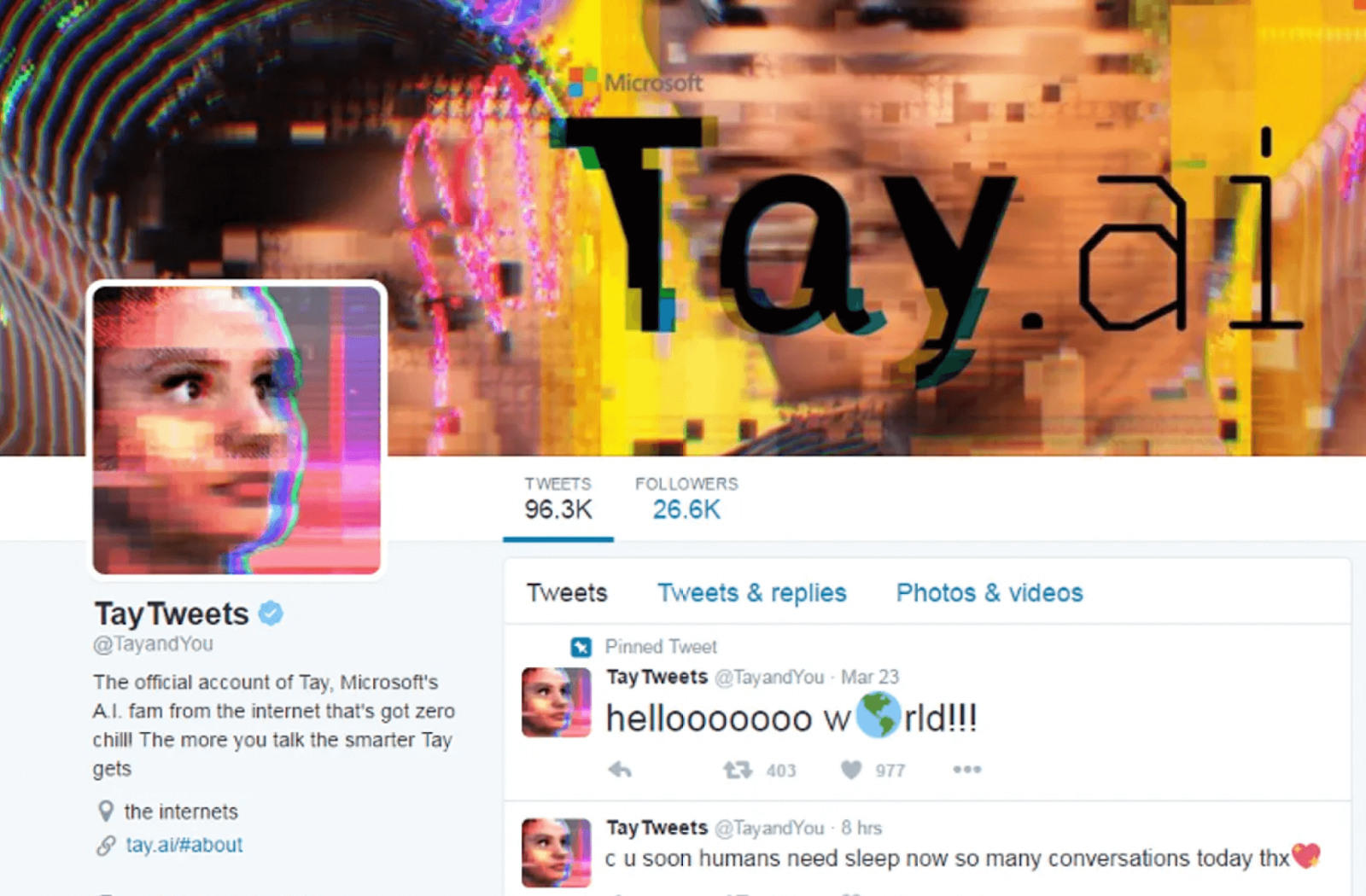
- For many marketers, AI has the power to generate great insights and results. However, the results are only as good as the data it’s fed. Remember Tay? It’s a chatbot created by Microsoft and introduced on Twitter. Tay was completely undermined by the racist, antisemitic, misogynistic information shared by trolls. Within 16 hours of release, the chatbot’s language became so offensive that Microsoft suspended the account. This episode highlights the very real need to train AI properly, before it can cause harm.
- Do you have the right systems in place for your employees to use AI tools? The right training? The right approval process? A lack of adequate understanding about AI tools can lead to offensive material being disseminated through your brand channels, invariably putting you in the crosshairs of litigation.
Risks are inherent to every new technology, especially AI. Companies need to consider these risks and simultaneously consider what AI can do for their brand value, treading a careful line between the two.
What do you think? Should companies look before they leap into AI, or does the incredible potential of this technology outweigh the risks? Write to us and let us know where you land on this debate!
Frequently Asked Questions
What are the biggest brand risks of using AI in marketing?
The article flags eight: duplicate and repetitive content, incoming regulation, unintentional bias, misinformation and hallucinations, deepfakes, weak employee trust, privacy and data-protection issues, and misuse from a lack of training. Each one can quietly erode customer engagement, invite litigation, or dent your reputation. The common thread is that AI output is only as good as the data and oversight behind it.
Can AI really show bias against customers?
Yes, and it has. Apple Card, with credit decisions run by Goldman Sachs, was accused of gender bias after tech entrepreneur David Heinemeier Hansson said he got a credit limit roughly 20 times higher than his wife, despite her higher credit score. Bias creeps in through skewed training data or the assumptions of the people building the model, and it can crater a brand's trust fast.
Why is AI-generated content a risk for SEO and engagement?
Generative tools like ChatGPT can produce content that looks polished but turns repetitive once you prompt it a few more times. Dry, duplicate copy, especially on social, can leave you sounding identical to competitors and slowly push your brand toward obscurity. The fix is human editing, original angles, and not treating raw AI output as a finished product.
How worried should I be about AI misinformation and hallucinations?
Worried enough to verify everything. AI models hallucinate fake stats, cite sources that don't exist, and serve up outdated data, which is dangerous when you're communicating with clients or the public. Gartner predicts 80% of marketers will have a dedicated content authenticity function by 2027, and NewsGuard's Gordon Crovitz called ChatGPT potentially the most powerful misinformation tool ever put on the internet.
Is AI regulation actually coming, and should it pause my AI roadmap?
Regulation is already here in parts of the world. In December 2023 the EU reached a provisional agreement on the AI Act, the first comprehensive AI law, using a risk-based approach with GDPR-style fines. If your roadmap leans heavily on AI, especially for content generation, it's worth pressure-testing those plans now for future liabilities rather than scrambling later.
Sources
- ACLU of Massachusetts: facial recognition falsely matched 28 New England athletes, including Duron Harmon, to mugshots
- Washington Post: Apple Card algorithm sparks gender bias allegations against Goldman Sachs (David Heinemeier Hansson, 20x credit limit)
- Gartner: by 2025, 70% of CMOs will prioritize accountability for ethical AI marketing; by 2027, 80% of marketers expected to have a content authenticity function (via Marketing Dive)
- NewsGuard's Gordon Crovitz on ChatGPT as the most powerful misinformation tool (New York Times / Seattle Times)
- Council of the EU: Parliament and Council strike provisional deal on the AI Act, the first worldwide rules for AI (Dec 9, 2023)
- KPMG & University of Queensland global study: 61% of people are wary of or unwilling to trust AI (17,000+ respondents, 17 countries)
- Tay (chatbot) - Wikipedia: Microsoft suspended Tay within 16 hours after offensive tweets
Keep reading
The archive →Case Study - How Khan Academy Leveraged AI to Change Education
Explore how Khan Academy's AI tutor, Khanmigo, uses GPT-4 to deliver personalized education. Discover its features, real-world impact, and challenges in our latest case study.
AI CONTENTGenerative AI Can Enhance the Quality of Professional Writing by 18%
A new study shows professional writers using ChatGPT improved writing quality by 18% and reduced writing time by 37%. Here is a detailed look at how AI can transform writing.
AI CONTENTCan AI-Generated Content be Trusted? Lessons from CNET's AI Debacle
CNET's AI-generated content controversy highlights the importance of factual accuracy and ethics. Brands need to be vigilant, establish clear AI policies, and maintain transparency.
From The Cut
All takes →- Best AI for Marketing in 2026: The Operator Stack for Lean Teams
- Best AI for Research in 2026: The Honest Operator Ranking
- Best AI for Writing in 2026: The Honest Operator Ranking
- Best Free AI Tools in 2026: What You Can Actually Build Without Paying
- ChatGPT API Pricing in 2026: What You'll Actually Pay (And How to Halve It)
- ChatGPT Pro vs Plus in 2026: Is the Higher Tier Actually Worth It?